
Advocacy · 30 January 2026 · 8 min read
Why neglected tropical diseases still decide who gets left behind
NTDs are not rare. They are neglected — and neglect is a policy choice young people can still reverse.
Foot Impact
Neglected tropical diseases sound like a specialist's problem. They are not. They are the worms, the skin conditions, the slow damage that thrives where water is unsafe, toilets are far, and clinics are further. They keep children out of school and adults out of work. They are neglected because the people who live with them are.
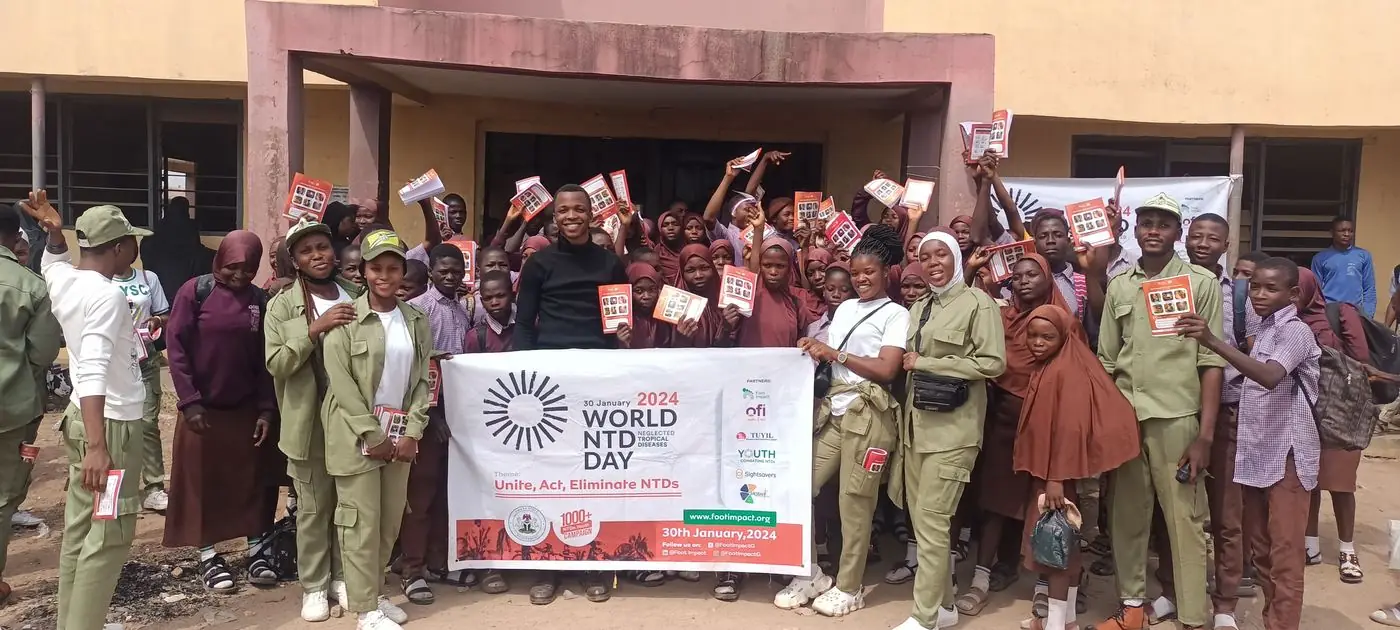
On World NTD Day 2024 we ran campaigns across five states, mobilised more than a thousand young people, and reached about 10,000 residents. That is a beginning. Mass drug administration and ministry programmes do the heavy clinical lift. Our job is to make sure communities know why a pill, a latrine, and a handwashing station belong together.
Youth are not a communications channel
Too many programmes treat young people as a way to make a poster look alive. We treat them as organisers. A school club that can explain schistosomiasis in the local language is more durable than a one-day rally. A state coordinator who already knows the WASH officer is more useful than a visiting team with a generator and a deadline.
Health equity is not a metaphor. It is whether a child in Bauchi and a child in Abuja have the same chance of growing up without a preventable infection.
NTDs will not be beaten by a single commemorative day. They will be beaten by boring, repeated, community-owned work: water, sanitation, information, and a generation that refuses to call this normal. That is the movement we are building — 5,500 members, 11 states, and room for you.
Want this in your school or LGA?
Work with us
